Under-slab leaks found and marked without breaking concrete — until the repair needs one precise opening.
A slab leak is a leak in a water or drain line running beneath your home's concrete foundation. Because the pipe is entombed in concrete and soil, the leak can run for months — undermining soil, feeding mold, and inflating water bills — while showing only subtle symptoms above. ("Slab leak location" is simply another name for this same service.)
Hawthorne is prime slab-leak territory: its 1950s–60s ranch homes were built on concrete slabs with galvanized steel supply lines and cast-iron drains that are now 60+ years into service. Professional detection pinpoints the leak with instruments so any repair opens one marked spot — not the whole floor.
The local housing stock tells the story. Hawthorne's post-war ranch homes sit on concrete slabs threaded with original galvanized steel supply lines and cast-iron drain stacks — materials now operating decades past their comfortable service life. Galvanized corrodes from the inside, cast iron separates at joints, and copper (where present) develops pinhole leaks.
Add soil movement, hard water, high pressure, and thermal expansion cycling on hot-side lines, and under-slab failures become a when-not-if proposition for the oldest homes.
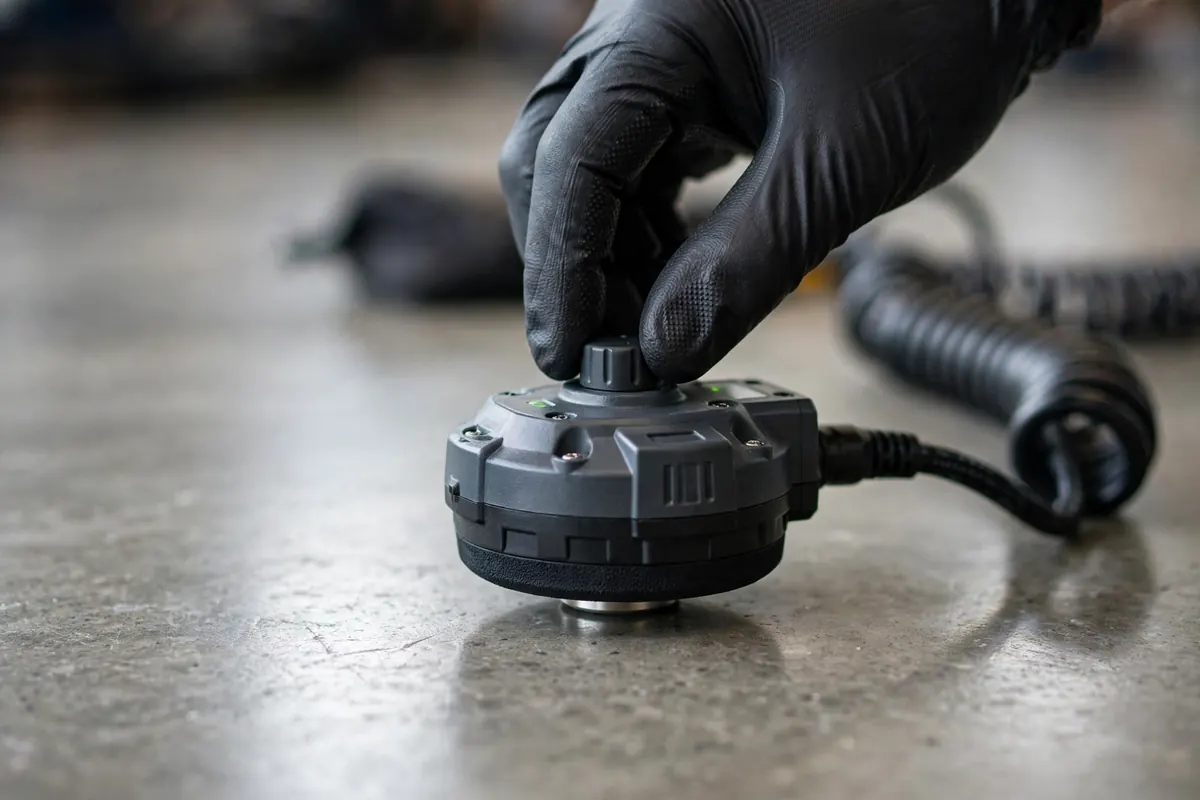
Detection follows a sequence, not a sledgehammer. Acoustic listening is usually first — sound travels well through concrete, making it excellent for pressurized under-slab lines. Thermal imaging scans for the warm footprint of hot-water leaks. Pressure and isolation testing confirm which line is losing water.
Methods are combined until the location is certain, then marked on the surface. The concrete is opened only at that marked spot, if a repair is needed at all.
Not every under-slab leak is a supply line. Pressurized supply leaks announce themselves with sounds, warm spots, and meter movement; drain-side leaks under the slab tend to show as odors, dampness, or settlement — and are diagnosed with a hydrostatic test plus camera inspection rather than listening gear. Part of a professional survey is determining which system you're dealing with before choosing instruments.
Getting this distinction right matters because the instruments differ completely — and so does the repair that follows. A supply leak chased with drain tools, or vice versa, wastes the visit. That's why the isolation step comes before any pinpointing begins.
Detection ends with a marked location and documentation — the repair decision comes separately. Common approaches include direct access (opening the slab at the marked spot) or rerouting the line above the slab; which fits depends on the pipe, the leak, and the home's layout, and is decided with a repair professional.
On insurance: policies vary, and detection versus repair are usually treated differently — check your own policy rather than assuming coverage. We document findings in a form that's useful for those conversations, without promising outcomes.
One more practical point: detection and repair are separate visits with separate decisions. A precise mark means you can get comparable repair quotes against the same known location — instead of paying three contractors to re-diagnose the same leak.
A no-use water-meter check confirms a leak exists before instruments come out.
Pressure testing narrows the loss to hot vs. cold, supply vs. drain, and which run.
Ground microphones trace the pressurized leak's sound across the slab to its peak.
Infrared scanning cross-checks the location, especially for hot-water lines.
The leak's position is marked on the floor and documented for any targeted repair.
Electronic listening that finds hidden leaks through concrete, soil, and flooring — no demolition.
Learn more →Infrared cameras that read the heat signature of hidden moisture — a non-contact scan with zero damage.
Learn more →A definitive yes-or-no test for drain-line integrity beneath your foundation — before anyone digs.
Learn more →Water flowing where it shouldn't? Here's what to do right now — and how we help.
Learn more →Every day a hidden leak runs, the water bill climbs and the damage spreads. Call now — we answer 24 hours a day.
+1 424-544-0197 ☎ Call Now Request Leak Detection Service