Safety first, always — professional gas-line inspection for Hawthorne homes and businesses.
If you smell gas (rotten-egg odor), hear hissing near a gas line, or suspect a leak: leave the building immediately, do not touch light switches or phones inside, and from a safe distance call 911 and your gas utility (SoCalGas).
Never try to find, test, or repair a suspected gas leak yourself. A professional inspection happens only after the area is declared safe.
If you smell gas right now, stop reading: get everyone out of the building immediately, do not touch light switches, phones, or appliances, do not re-enter, and call 911 or the gas utility from a safe distance. Never try to find or fix a gas leak yourself — it can be deadly.
For suspected leaks once an area is declared safe — or for preventive inspections — professional gas line leak detection covers the fuel-gas piping in your home or building: supply lines, appliance connectors, and shut-off valves. This is entirely separate from our tracer gas service, which uses an inert gas to find water pipe leaks.
Memorize this order, because the order matters: 1. Evacuate everyone — including pets — immediately, leaving doors open as you go. 2. Do not flip switches, use phones, light anything, or start vehicles nearby. 3. From a safe distance, call 911 or the gas utility. 4. Do not re-enter until professionals declare it safe.
A plumber or inspector comes after the emergency is cleared — never during it.
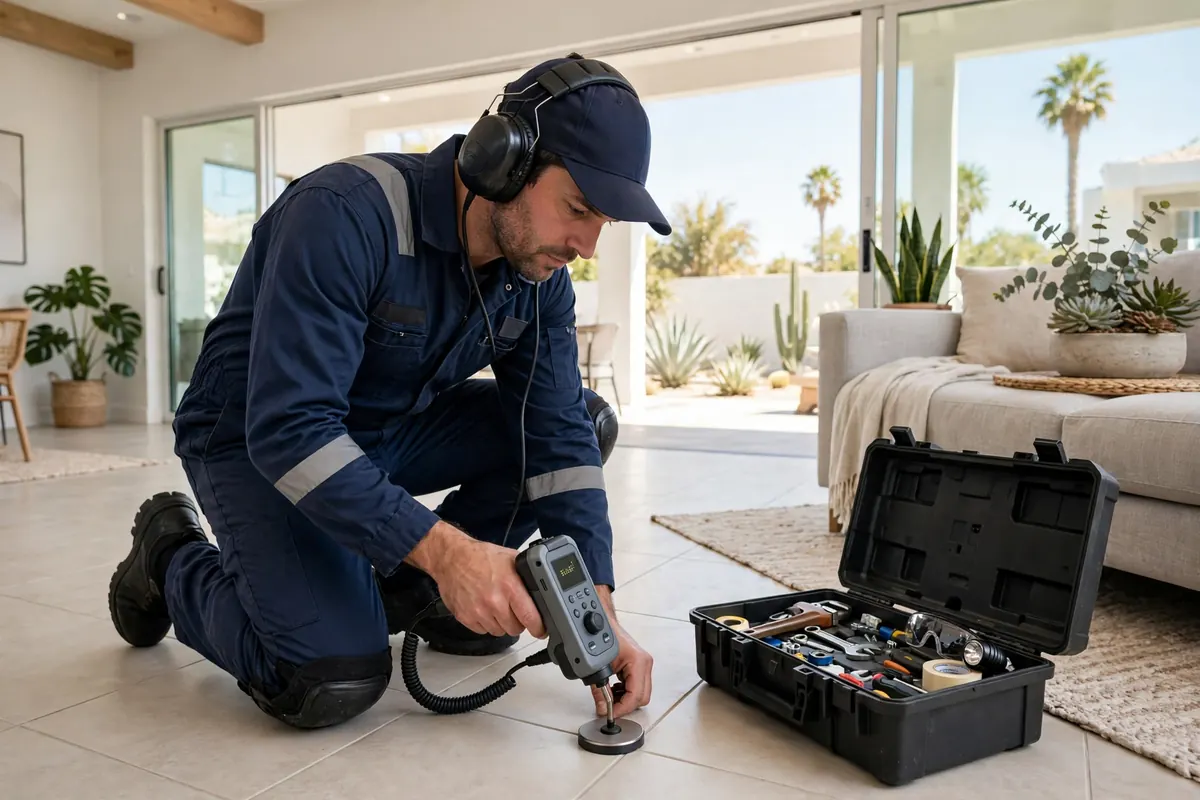
Once an area is declared safe, an inspection systematically checks the fuel-gas system: visible supply piping and joints, appliance connectors (a common failure point behind stoves, dryers, and water heaters), the condition and accessibility of shut-off valves, and signs of corrosion or physical damage on aging lines.
In earthquake country, we also discuss seismic shut-off valves, which automatically close the gas line during significant shaking — a preventive option many Hawthorne homeowners consider after experiencing a quake.
Do not try to locate a gas leak with soapy water, a lighter, or your nose — and do not attempt any repair yourself. Gas-line repairs must be handled by qualified gas technicians only; this isn't caution for caution's sake, it's because mistakes with fuel gas are deadly. If anyone ever suggests you "sniff around" for the leak, they're giving dangerous advice.
Not every gas-line visit is an emergency. Sensible triggers include buying an older home with unknown gas-line history, after an earthquake, when adding or replacing gas appliances, or if lines show visible corrosion. A preventive inspection documents the system's condition and valve locations — useful knowledge long before anything goes wrong.
Gas-line work is regulated specialist work, and we describe our inspection service factually: systematic inspection and leak detection of fuel-gas piping, with findings documented and valve locations noted. We make no licensing or certification claims on this page, and any repair work is referred to appropriately qualified gas technicians.
If an inspection finds an issue, you'll receive a clear written description of what was found and where — documentation you can hand directly to the qualified technician who performs the repair, with no translation needed.
Your call is screened first for immediate danger — active suspected leaks go to 911/the gas utility, not to a scheduled visit.
Inspection proceeds only after the property is declared safe by the appropriate responders.
Supply lines, joints, appliance connectors, and shut-off valves are checked methodically.
Issues, valve locations, and line conditions are documented in plain language.
Any needed repair work is referred to qualified gas technicians — we don't improvise on fuel gas.
Water flowing where it shouldn't? Here's what to do right now — and how we help.
Learn more →A safe, inert tracer gas that escapes at the defect and leads us straight to hidden water-pipe leaks.
Learn more →Leak surveys for buildings that can't afford downtime — documented and minimally disruptive.
Learn more →Every day a hidden leak runs, the water bill climbs and the damage spreads. Call now — we answer 24 hours a day.
+1 424-544-0197 ☎ Call Now Request Leak Detection Service